
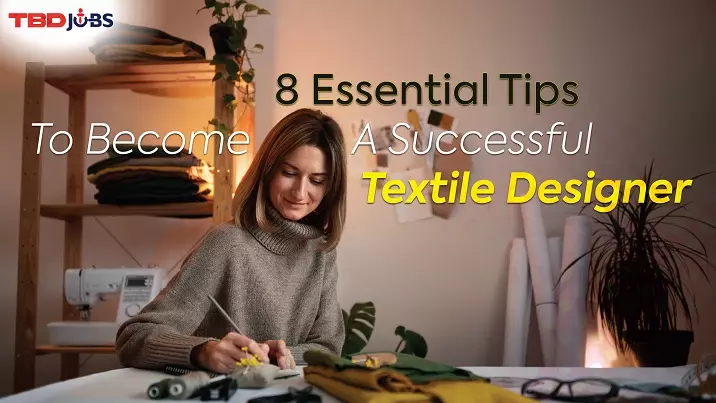
Are you ready to launch or advance your career in the vibrant world of fabric and pattern? At TBD Jobs, India's leading textile job portal, we connect passionate fabric designer job seekers with the best opportunities across the industry. Whether you're a recent graduate or an aspiring professional, this guide provides you with actionable strategies for making it big in a dynamic textile designer job.
Also Read:- Clothing Designer Careers: Roles, Skills & Salary Guide
Mastering Your Craft: Essential Skills for Success
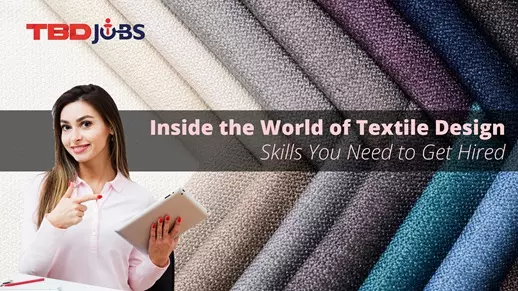
A successful career as a textile and fabric designer starts with an impeccable skill set that incorporates creativity and precision. Though it is great to know the basics of design, one has to focus beyond that and learn the techniques that will make your portfolio look attractive to the employer.
Develop Technical Proficiency in Digital Tools
Indexing artwork for production is a major, critical and highly marketable skill in the textile designer job market. Quite often, clients would have a complex and textural pattern while trying to cut costs down by being more economical with colours in the printing process. By commanding the indexing tool in Photoshop, such a detailed design could be taken down to fewer colours, sometimes only six, without losing its visual impact. In this case, you will be able to give brands what they want: intricate and high-quality prints, at the same time meeting their budgetary and production limitations. Thus, making you an asset to hire.
Design with the End User in Mind
Good textile design is more than aesthetics; it's about how a pattern will sit on the body. For use on garments, choose patterns that exhibit movement, flow, and diagonal compositions that are flattering to different body types. Always test your repeating pattern at actual size and consider where pattern motifs land on a garment. Does it make a person wearing it feel confident, elegant, or empowered? This is what gives the successful commercial designer the edge over others.
Build Expertise in Traditional Techniques
India has a really rich textile heritage with special skills that will differentiate you from others. Consider learning traditional methods like:
-
Block printing from Rajasthan
-
Embroidery such as Zardozi and Chikankari
-
Dye techniques, including Bandhani tie-dye
Narrative arts such as Kalamkari. These skills link you to cultural traditions and also offer unique design ideas for modern fashion.
Also Read:- Apparel Industry Jobs & Career – Complete 2025 Guide
Building Your Professional Foundation
Learn to Interpret Fashion Trends Creatively
The fashion world follows trends, but the good designers don't just copy; they interpret. Learn how to take runway trends and adjust them for bigger markets. This can often be done by changing colours, resising patterns, or mixing trend ideas with timeless designs. The top designers offer fresh takes on the trends rather than exact copies.
Look at The Whole Design Picture
A contemporary textile designer must know the whole life of their products, which includes:
-
How materials are made and the technical details
-
How things are produced and any limits in production
-
Cultural meaning and context
Business factors include cost and how well the product fits in the market. Programs like The Design Village focus on this integrated approach, orienting designers for the job at hand.
Emphasise Environmentally Friendly Practices
With growing environmental concern, sustainable design becomes an important specialty, from organic materials to natural dyes, zero-waste patterns, or circular design ideas. Kantha stitching is one technique that reuses fabrics to show traditional methods within the scope of modern sustainability goals.
Create a Varied and Solid Portfolio
Your portfolio should demonstrate your skill and creativity. Include:
-
Commercial patterns that reflect trend awareness
-
Technical examples include indexed colour work
Cultural projects that use traditional techniques. Sustainable design projects, Work that fits international markets. Organise your work in such a way that it tells a story about your design beliefs and abilities.
Make Industry Connections Through Real Experience
The textile field values hands-on work. Look for internships, join workshops, and connect with professional groups. Sites like TBD Jobs offer virtual hiring and networking to connect new designers with established companies. These connections help you learn industry timelines, the realities of production, and new opportunities.
Your Path Forward in Textile Design
A successful career in textile design requires art and technique, knowledge of the market, and cultural appreciation. It also requires creative drive and practical business sense. Developing these skills opens doors in many areas, from clothing and home decor to technical fabrics and sustainable fashion.
Wish to grow your career in textile design? Explore opportunities matching your skills on TBD Jobs, the best job platform in the textile industry in India. Create your profile today to connect with employers looking for your talent and start building your dream textile design career.
Also Read:- Specialised Fashion Careers: The Rise of Stylists, Technologists & Emerging Roles








.webp)




Leave a Comment
8 Comments
16 Jan 2026, 09:16 PM
20 Jan 2026, 06:16 AM
31 Jan 2026, 04:42 PM
15 Feb 2026, 05:47 AM
13 Mar 2026, 04:14 AM
27 Mar 2026, 05:23 AM
10 Apr 2026, 12:45 PM
24 Apr 2026, 12:34 PM